
Cobots
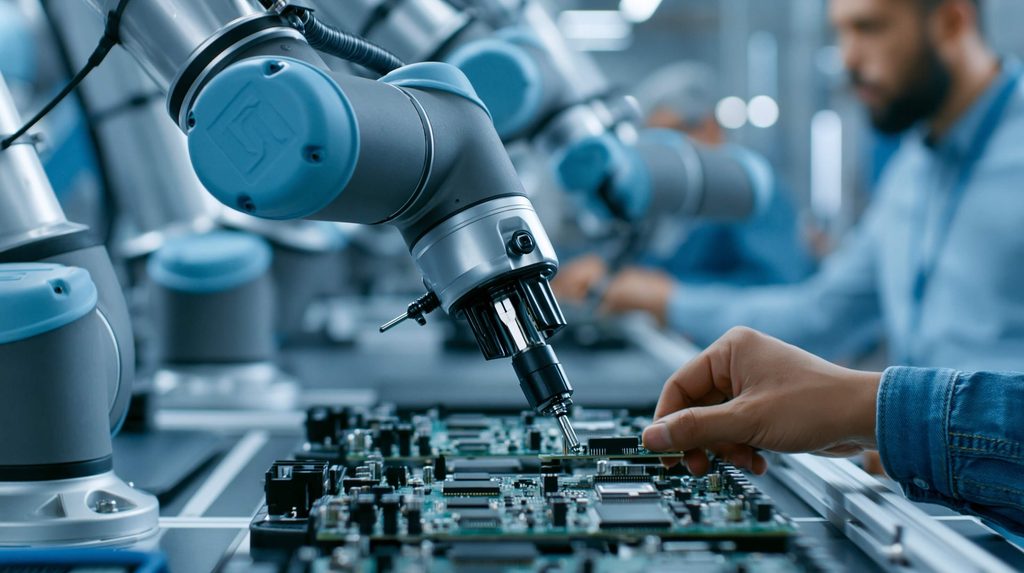
Collaborative robots
Collaborative robots, or cobots, are designed to operate in environments where humans and automated systems work together. Unlike traditional industrial robots operating within highly controlled spaces, collaborative robotic systems can benefit from advanced perception technologies that help them interpret their surroundings and respond to dynamic environments.
Cameras, 3D sensing, radar, and edge processing can provide the environmental information required for advanced robotic perception. By processing sensor information close to the source, intelligent sensing architectures can support machine vision, human detection, object awareness, and real-time robotic automation. Vision-processing technologies used for robotics already support machine vision, multi-sensor architectures, 3D perception, and 360-degree vision.
Enabling Key Capabilities
Human and Environment Awareness
Cobots operate in environments that may include people, machinery, tools, and moving objects.
Visual and other sensing modalities provide environmental information that can be used by robotic perception systems to identify and interpret what is happening around the machine.
Machine Vision
Machine vision enables robotic systems to capture and process visual information for automated tasks. High-performance image-processing architectures can support multiple high-resolution sensors while preparing camera information for computer-vision algorithms. Machine vision is explicitly identified among current robotics and industrial vision-processing applications.
Object Detection
Cameras and radar can provide complementary approaches to object awareness.
Radar is used for object detection in robotic automation and provides real-time detection and distance measurement capabilities.
3D Perception
Three-dimensional sensing helps robotic systems build richer representations of their surroundings. Current vision architectures for robotics support 3D perception cameras alongside conventional machine-vision applications.
360-Degree Vision
Multi-camera architectures can provide broader visual coverage around a robotic platform. Vision-processing technologies already support 360-degree vision and multiple high-resolution camera inputs.
Advanced Image Signal Processing
A camera does not directly provide optimized information to an AI system. Raw image data first needs to be processed. An Image Signal Processor, or ISP, performs this critical function between the camera sensors and perception algorithms.
Advanced ISP architectures can support:

Multiple simultaneous camera inputs
High-dynamic-range imaging

Low-light optimization

Color processing

Image enhancement
Multiple high-resolution sensors
Low-latency image processing
RGB and infrared sensor configurations
For cobots, this creates a streamlined perception pipeline:
Sense. Process. Understand. Interact.

Sense
Capture the environment through multiple image sensors

Process
Transform raw sensor data into optimized visual information.

Understand
Analyze the resulting information through computer vision and AI.

Interact
Provide perception information to the broader robotic system.
Building a Perception Architecture for Collaborative Robotics
Physical AI connects digital intelligence to systems that interact with the physical world.
For cobots, perception represents an important part of that connection.
A scalable architecture can combine:
Multi-Modal Sensors
Cameras
Depth
IR
Thermal
Radar
Edge Sensor Processing
ISP
Geometric Processing
Signal Processing
Edge AI
Computer Vision
Neural Processing
DSP
Environmental Perception
Robotic System
The objective is not simply to collect more sensor information, but to efficiently transform that information into a representation of the physical environment that downstream robotic systems can use.
Products
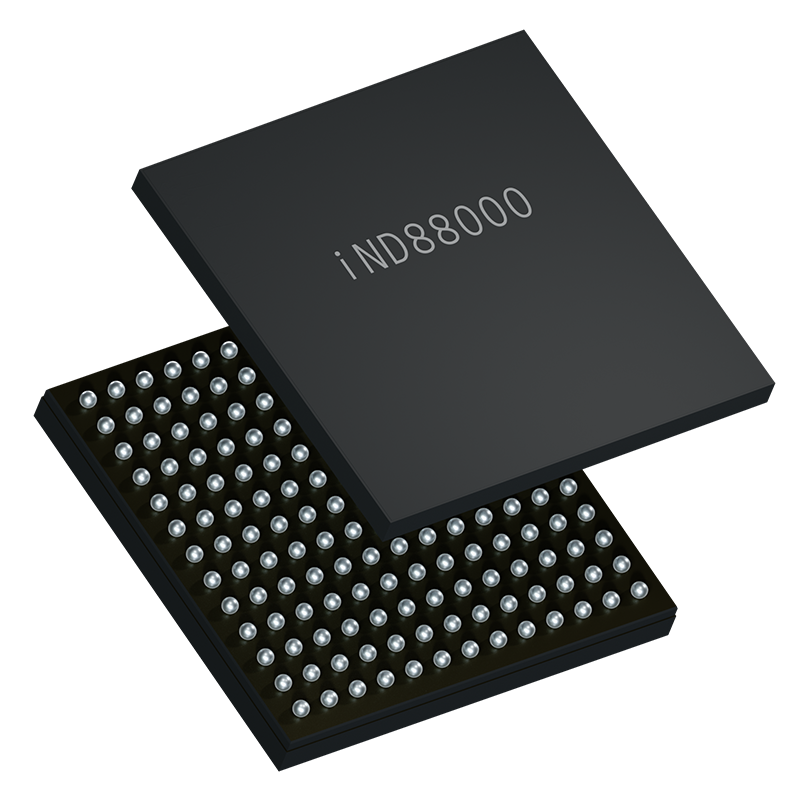


Resources
indie Semiconductor Introduces Class-leading Computer Vision Processor Family
Explore advanced image-processing capabilities including multi-camera operation, HDR, low-light processing, and proprietary ISP technology.
indie Semiconductor’s Latest Vision Processor Design-win Momentum Accelerates, Awarded Sensor Innovation of the Year
Learn more about high-dynamic-range vision, low-light capabilities, real-time processing, and memory-efficient vision-system architectures.