
Factory Automation

End-of-line inspection of workpieces like bottles, boxes or plastic containers
Detection of extraneous matters in food industry
Measurement of filling level inside storage tanks for liquids and bulk solids
Accurate position recognition of a workpiece
Smarter Manufacturing Through Advanced Radar Sensing
Automation is transforming manufacturing by improving quality, efficiency, and process control. Radar sensing technologies provide precise, real-time measurements that support inspection, monitoring, and production processes while operating reliably in challenging industrial environments. Their ability to measure through dust, steam, plastic, and other non-metallic materials makes them valuable for a wide range of factory automation applications.
Key application:
- Non-destructive material testing
- Quality control of nonmetallic materials like inclusions or thickenings
- Thickness measurement
- Thickness measurement of non-metallic parts such as plastic tube extrusions
- Precise and reliable determination of the thickness of paint and powder coatings
- Level measurement
- Precise detection of material cone geometry
How Radar Creates Value
Production environments require accurate measurements without disrupting operations. Advanced sensing technologies enable inline inspection, process monitoring, and material characterization while reducing waste and improving product consistency. By providing reliable measurements in real time, manufacturers can optimize production processes, improve quality control, and increase operational efficiency.
Why Radar?
Modern manufacturing environments require sensing technologies that can operate reliably under demanding conditions. Radar enables precise measurements, continuous monitoring, and automated inspection while maintaining performance in environments where optical systems may be affected by dust, moisture, steam, or contamination.
Radar Advantages
High-frequency sensing technologies deliver accurate distance, motion, velocity, and occupancy information while supporting real-time monitoring and automation across diverse deployment environments.

Non-contact measurement and inspection

Real-time process monitoring

Reliable operation in harsh industrial environments

Detection through non-metallic materials

High measurement accuracy

Reduced waste and improved quality control

Supports automation and process optimization

Compact, low-power implementation
Radar Solutions
TRA_120_002
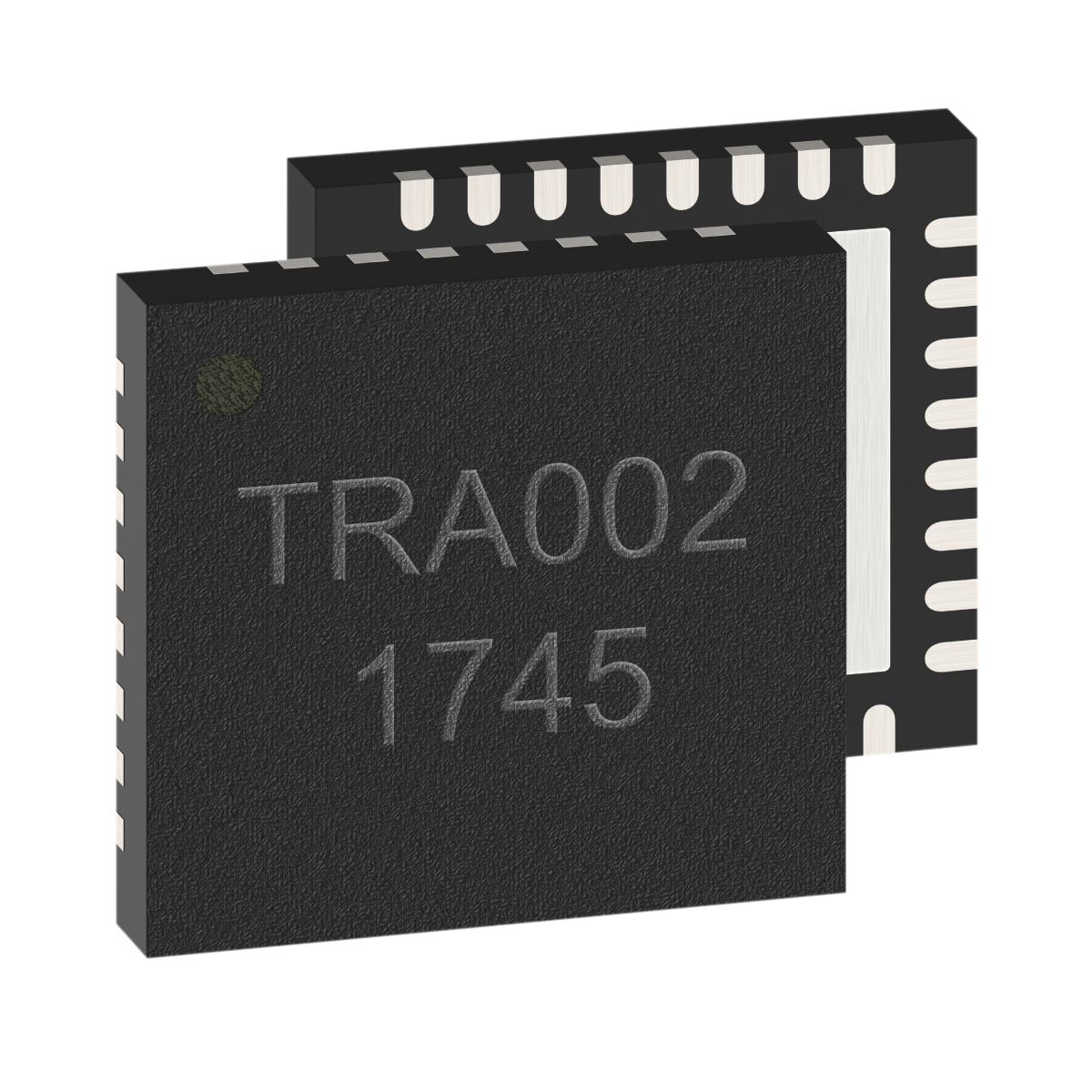
120 GHz Radar Transceiver
TRX_120_089

120 GHz Transceiver Front-end
TRA_240_097

240 GHz Integrated Transceiver
Beyond Radar Solutions: Industrial & Autonomous Systems Perception
Industrial and autonomous systems increasingly need to operate reliably in environments that are dynamic, unpredictable, and shared with people. Besides reliable radar solutions, these systems can be supported by robust vision perception to understand their surroundings, identify relevant objects and people, and respond appropriately to changing situations.
Our perception software technology combines human, object, and environmental understanding to provide autonomous systems with the contextual information they need to operate safely and efficiently. Designed for embedded applications, our solutions can be adapted to different hardware platforms and use cases, enabling real-time perception for next-generation industrial and autonomous systems.
Use Cases

Distance Estimation

People Detection

Object Detection

Emergency Exit Detection

Collision Warning

Efficient Route Establishment