
Ophthalmic Surgery

Advanced Photonics for Precision Vision Correction and Eye Surgery
Modern ophthalmic surgery has transformed the treatment of vision disorders, enabling millions of patients to benefit from improved eyesight and enhanced quality of life. Procedures such as LASIK, lenticule extraction (SMILE), and corneal ring segment implantation rely on laser technologies capable of reshaping ocular tissue with exceptional precision. Ultrashort laser pulses allow surgeons to modify the optical properties of the eye while minimizing thermal effects on surrounding tissue.
Successful ophthalmic procedures depend not only on laser performance but also on accurate visualization, measurement, and positioning during treatment. Optical Coherence Tomography (OCT) has become an essential diagnostic and guidance technology, providing high-resolution imaging that supports surgical planning and real-time system alignment.
Key Ophthalmic Surgery Applications
LASIK
Laser-Assisted In Situ Keratomileusis (LASIK) corrects refractive errors by reshaping the cornea. Ultrashort laser pulses provide highly precise tissue ablation while minimizing unwanted thermal effects.
SMILE (Small Incision Lenticule Extraction)
SMILE procedures use laser technology to create and remove a refractive lenticule within the cornea, reducing tissue disruption while improving visual outcomes.
Corneal Ring Segment Procedures
Intracorneal ring segments are implanted to modify corneal shape and improve vision in selected patients. Accurate imaging and positioning are critical to successful outcomes.
Cataract Surgery Planning
OCT and optical biometry technologies provide the detailed ocular measurements required for surgical planning and intraocular lens (IOL) selection.
Image-Guided Ophthalmic Procedures
Integrated imaging technologies allow surgeons to visualize eye structures in real time, helping improve precision during treatment.
Why OCT Matters in Ophthalmic Surgery
Lasers are only one component of a successful ophthalmic surgical system. Accurate visualization and positioning before and during treatment are equally important. OCT provides high-resolution cross-sectional imaging of the eye, supporting:
Key Benefits

Surgical planning

Corneal assessment

Real-time visualization

Treatment guidance

Post-procedure evaluation

Improved surgical accuracy
Related Products
Near-infrared and Visible SLEDs

High-performance Superluminescent Light Emitting Diodes (SLEDs) with wavelengths from 400-1700 nm, available in various power, bandwidth, and packaging options.
SLED Driver Boards
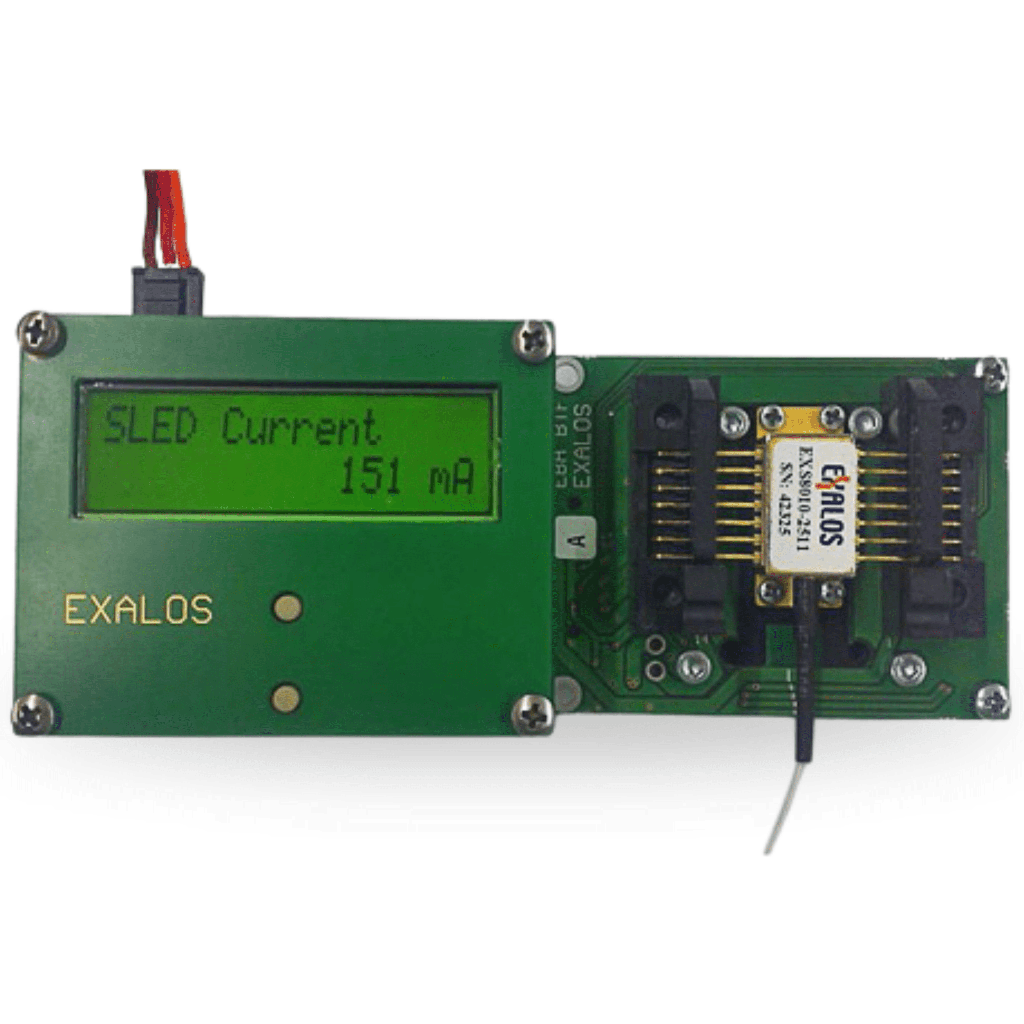
Ultra-stable, low-noise RGB and NIR Driver Boards for interferometric applications, offering versatile connectivity and advanced control for OEM and R&D use.
Combined-SLED Modules

Advanced Superluminescent Light Emitting Diodes (SLED) modules that provide Ultra-Broadband by spectrally combining the light of multiple SLED chips into a single output from a standard 14-pin Butterfly package.
Resources
Improved Combi-SLED at 740-940 nm for High-Resolution OCT
Discover how ultra-broadband light sources can improve imaging resolution and contrast in ophthalmic OCT systems