
Autonomous Vehicle Occupant Monitoring
Interior analysis
As automated shuttles and robotaxis move into real-world operation, understanding what is happening inside the vehicle is becoming just as important as understanding the road ahead. Interior analysis combines AI-powered vision with complementary sensing technologies to continuously monitor the cabin, helping ensure occupant safety, detect emergencies, support intuitive human-vehicle interaction, and enable more efficient fleet operations. From pre-departure safety checks to occupant-aware comfort and remote assistance, intelligent in-cabin sensing is becoming a key enabler of safe, seamless and scalable automated mobility.

Use Case Examples
Below is a non-exhaustive listing of key supporting applications for autonomous vehicle occupant monitoring use cases.

Passenger Detection

Fall Detection

Passenger Counting

Violence Detection

Passenger Localization

Stroller Detection

Passenger Status

Wheelchair Detection
Flexible & Scalable Camera Positioning
The position of the camera can be chosen completely flexibly depending on your use cases and specific requirements. It is possible to operate with a single camera, however, also multi-camera networks for optimal area coverage are supported.
Wide Sensor Support
Our software supports a wide range of sensor technologies. We can cover NIR, RGB-IR, ToF and more.

Projects and Production
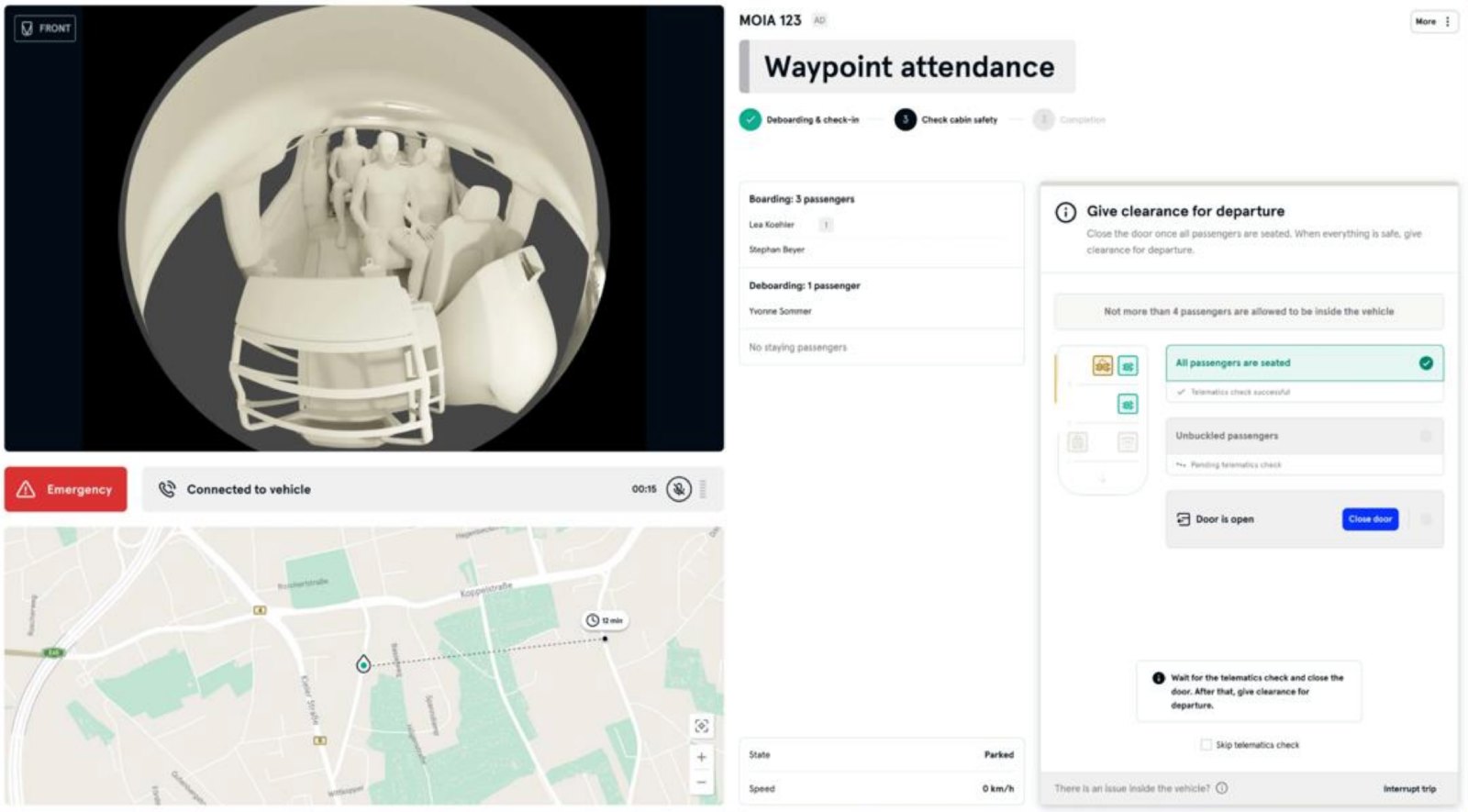
In-cabin analysis in autonomous vehicles is a key element to ensure safety and comfort of occupants. One of the important projects has been our work together with MOIA regarding Volkswagen’s self-driving, all-electric ID. Buzz AD. Read more details in the following press release.
Interested in the exterior hardware capabilities of autonomous vehicles?

Radar

LiDAR
