
LiDAR
FMCW LiDAR Building Blocks
indie supplies the laser and the signal-processing silicon at the heart of FMCW LiDAR, so sensor makers can take a reference design to volume production.

What every FMCW point carries
LiDAR gives machines a precise 3D view of their surroundings. Coherent FMCW sensing goes further: each point also carries its own velocity, reflectivity and confidence, so a vehicle or robot can tell at once what is moving. That matters in highway and urban driving, parking, robot navigation, 3D mapping and smart infrastructure.
Range
Distance from the sensor to the point.
Azimuth
Horizontal angle of the point.
Elevation
Vertical angle of the point.
Radial Velocity
Added by FMCW
Speed toward or away from the sensor, measured directly rather than estimated across frames.
Reflectivity
How strongly the surface returns light.
Confidence
How reliable that point’s measurement is.
Why FMCW LiDAR
Time-of-flight (ToF) LiDAR is proven and widely deployed for accurate 3D ranging. FMCW builds on it by measuring velocity at every point, which helps in the hardest moments of a dynamic scene.
| Time-of-Flight LiDAR | FMCW LiDAR | |
| 3D Range | Accurate | Accurate, measured directly |
| Velocity | Estimated across frames | Measured at every point |
| Tracking Load | More tracking and sensor fusion needed | Earlier hazard awareness, fewer ambiguous tracks |
| Sunlight and other LiDARs | Exposed to background light and mutual interference | Rejects ambient light; resilient to LiDAR interference |
| Maturity | Mature, widely deployed ecosystem | Builds on the same 3D-ranging foundation |
Tell two objects apart at 200 m
Optical resolution lets LiDAR separate nearby objects far more finely than radar, without ever-larger MIMO antenna arrays.

*Bars show the minimum lateral separation at which two targets are resolved, relative to LiDAR (shorter is better), approximated as range × angular resolution. Values are illustrative and depend on aperture, array layout, processing and target conditions. [Add the LiDAR separation in cm at 200 m.]
No radio-spectrum ceiling
Automotive radar shares tightly regulated spectrum: 76–81 GHz today, with D-band (110–170 GHz) being studied for the future. FMCW LiDAR works at optical wavelengths, which need no licensed radio spectrum, so performance can scale with bandwidth and interference is far less of a concern.
SURYA iND83301
One chip in place of an FPGA signal chain
Surya is a monolithic, software-defined mixed-signal SoC that takes the analog LiDAR signal all the way to a point cloud. It replaces the 5–7 ICs of a typical FPGA-based design, so modules become smaller, simpler and ready for production at scale.
- Power-efficient high-speed ADCs and DAC
- Hardware-accelerated FFT and DSP for compute-heavy steps
- Programmable DSP and CPU cores for software-defined LiDAR
- Synchronization engine with hardware-accurate system timing
- Multiple digital interfaces for easy system integration

Up to 80%
less PCB area than a representative FPGA design*
One SoC
in place of 5–7 ICs, for lower cost and power*
1-2 million
points/s on 4 channels, from long range (about 300 m) to short range
* Planning estimates versus a representative multi-device FPGA implementation; actual results depend on channel count, FPGA, converters, memory, interfaces and processing requirements.
.
LXM LASER MODULES
Narrow-linewidth DFB lasers for FMCW
Accurate distance and velocity need a very clean laser. Built on indie’s proprietary laser technology, LXM modules combine ultra-low phase noise, fast and highly linear frequency modulation and excellent long-term stability, with linewidths below 20 Hz.

From Automotive to Physical AI
Precise 3D perception with native motion, hardened for vehicles and ready for robots and intelligent machines.
Automotive ADAS

- Highway pilot
- Urban autonomous driving
- Vulnerable road user protection
- Autonomous parking and rear autonomy
Physical AI and Industrial
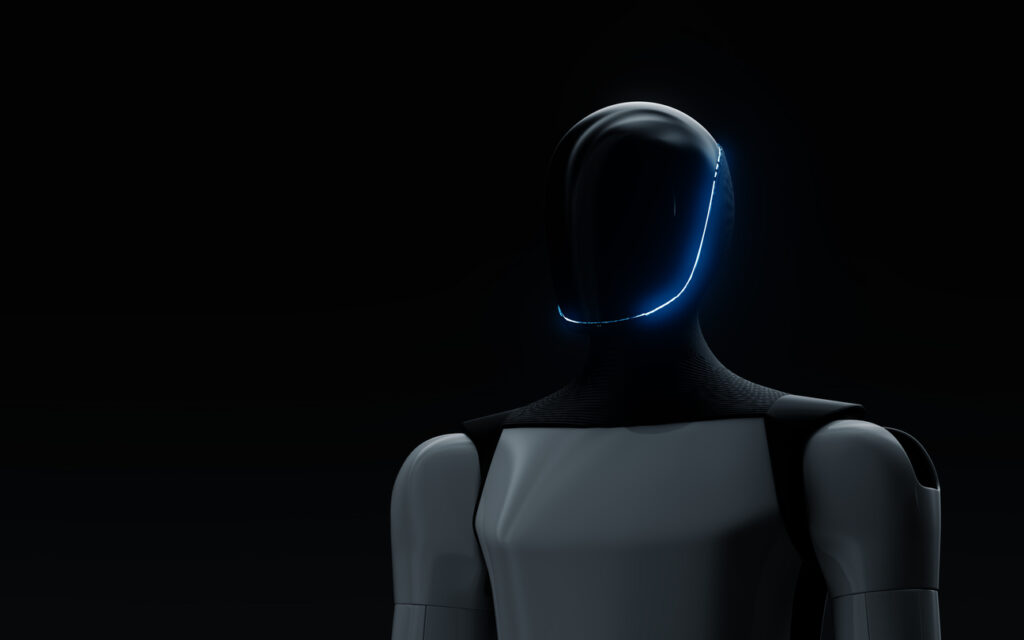
- Robot navigation and collision avoidance
- 3D mapping, localization and aerial inspection
- Smart infrastructure monitoring
- Manipulation, dimensioning and 3D body scanning