
Smart Applications

Radar for Smarter Environments
Radar sensing has expanded far beyond traditional automotive applications. Its ability to detect objects, motion, distance, velocity, and environmental conditions in real time makes it a valuable technology across agriculture, sports, and smart city infrastructure.
Unlike optical systems, radar can operate reliably in challenging environments, including darkness, rain, fog, dust, and other adverse weather conditions. High-frequency radar solutions provide precise environmental awareness while maintaining low power consumption and compact system integration.
As intelligent systems become increasingly autonomous, radar provides the sensing foundation needed to monitor environments, track movement, and support data-driven decision-making across a wide range of applications.

Agriculture & Forestry

Sports

Smart City
Agriculture & Forestry
Modern agriculture and forestry are being transformed through real-time environmental awareness and data-driven operations. Precision farming, autonomous equipment, and large-scale forest monitoring all benefit from reliable sensing in outdoor environments where weather, dust, and lighting conditions can challenge other technologies.
Precise and flexible maintenance inspections of difficult-to-access areas, components or surfaces
Localization through widespread farmland
Measuring of crown height, monitoring of density and shape of trees, estimation of timber volume and biomass
On-demandspreading of beneficial insects in case of pest infestation
Ad-hoc adaption of harvesting systems according to crop volume (grain)
Non-destructive detection of structural inconsistencies or damages to blades of wind turbines
Key application:
- Drones / UAVs for inspections
- Non-destructive detection of structural inconsistencies or damages to blades of wind turbines
- Precision farming
- Yield mapping, soil moisture measurement, status monitoring of crop growth, crop classification
- Environmental perception for agricultural vehicles
- Precise alignment of the accompanying vehicles
How Radar Creates Value
Continuous visibility into field and environmental conditions supports crop monitoring, yield mapping, soil moisture assessment, and crop classification. Reliable operation in fog, rain, dust, and low-light conditions helps improve decision-making throughout the growing season.
Vital sign monitoring
Prosthetics adjustment and individualization
Observation of traffic approaching behind the bike
Sports
Sports organizations are increasingly turning to advanced sensing technologies to better understand performance, movement, and biomechanics. Radar provides precise tracking of motion, speed, and trajectory, enabling deeper insights for athletes, coaches, and sports scientists.
Key application:
- Sports performance optimization
- Analysis and tracking of complex courses of movements (golf, javelin, and discus throw)
- Optimization of speed and accuracy of body movements
- Detection and tracking of sporting objects in motion
- Tracking of trajectory of flying objects like balls, discuses, arrows
- Support for sporting marksmen and avoidance of hunting accidents
- Referee assistance in ball games
- Supervision of health status of athletes
- Real-time monitoring of human muscle activity
- Biomechanics
- Position control of supporting exoskeletons
How Radar Creates Value
Objective performance insights can be generated by tracking both athlete movement and sporting objects in motion. Whether analyzing biomechanics or monitoring the flight path of balls and projectiles, the technology provides detailed performance data without requiring wearable devices or visual markers.
Smart City
Connected urban environments increasingly rely on intelligent sensing to improve efficiency, safety, and sustainability. Continuous operation in diverse environmental conditions makes the technology well suited for transportation systems, building automation, and public infrastructure monitoring.
Adaptive street lighting powers up light intensity on demand and saves energy in sleep mode
Motion sensors, object detection to control door openers, automated lighting, security surveillance
Driver assistance systems
Intelligent analysis of occupancy and consumer adoption and usage patterns
Traffic control for a safer and more liquid traffic flow, and thus fewer emissions
Key application:
- Parking management systems
- Real-time monitoring of availability of parking spaces
- Automotive in-chassis applications
- Gesture recognition for touchless display control
- Driver alertness, passenger presence detection
- Automated trunk and door control for protection of cyclists
- Roadway inspections while driving
- Seamless and reliable detection of roadway defects
How Radar Creates Value
Greater visibility into occupancy, traffic, and infrastructure usage enables smarter management of urban environments. Applications range from parking availability detection and lighting control to roadway inspection and building occupancy monitoring.
Why Radar?
Reliable sensing is essential for intelligent systems operating in dynamic environments. Accurate information about objects, movement, occupancy, and surroundings helps enable smarter decisions, improved safety, and greater levels of automation across a broad range of applications.
Radar Advantages
High-frequency sensing technologies deliver accurate distance, motion, velocity, and occupancy information while supporting real-time monitoring and automation across diverse deployment environments.

Operates reliably in darkness and adverse weather conditions

Enables contactless sensing and monitoring

Detects distance, speed, motion, and occupancy

Supports real-time environmental awareness

Suitable for indoor and outdoor deployments

Compact, low-power implementations

Enables automation, safety, and operational efficiency
Radar Solutions
TRA_120_002
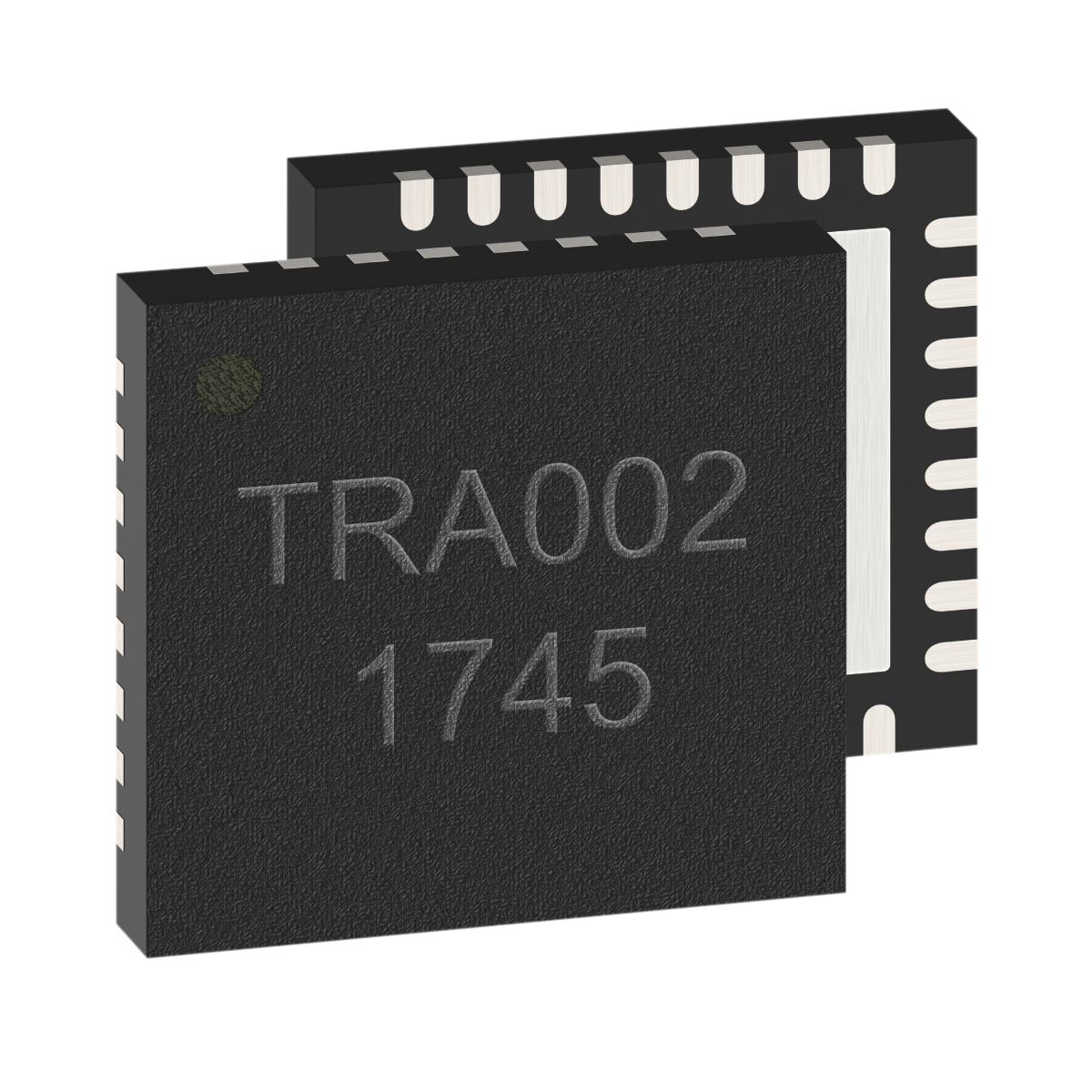
120 GHz Radar Transceiver
TRX_120_089

120 GHz Transceiver Front-end
TRA_240_097

240 GHz Integrated Transceiver