
DMS/OMS

Enabling Safer and Smarter In-Cabin Perception
As vehicles become increasingly automated, understanding what is happening inside the cabin is becoming as important as understanding the road ahead. Driver Monitoring Systems (DMS) and Occupant Monitoring Systems (OMS) use cameras, computer vision, and AI to continuously analyze drivers, passengers, and vehicle occupants in real time. These technologies support safety, regulatory compliance, vehicle automation, and enhanced user experiences.
Modern in-cabin perception systems go beyond simple driver-facing cameras. They combine advanced imaging, low-latency processing, AI-based behavior analysis, and multi-modal sensing to monitor driver attention, passenger occupancy, seatbelt usage, occupant positioning, and other safety-critical functions.
Key Applications
Driver Monitoring
Driver Monitoring Systems continuously analyze driver behavior and attentiveness to support advanced driver assistance and automated driving functions. DMS has become a key element of modern vehicle safety architectures and is increasingly integrated into next-generation sensing platforms.
Occupant Monitoring
Occupant Monitoring Systems provide awareness of passengers throughout the vehicle cabin, enabling perception systems to better understand occupant presence and activity. OMS contributes to overall vehicle safety, automation, and user experience objectives.
Active Safety
Real-time occupant analysis can contribute to active safety systems by providing information that helps vehicles respond appropriately to driver behavior in order to prevent accidents.
Passive Safety
Occupant perception can also contribute to passive safety systems by improving awareness of occupants and their positioning within the vehicle. These can be used to control airbag systems and seatbelts to ensure minimal damage to the occupants in the event of an accident.
User Experience
Vehicle manufacturers are increasingly using perception technologies to improve comfort, convenience, and the overall in-cabin experience. Intelligent sensing enables more personalized and responsive vehicle interactions.
Vehicle Automation
As automation levels increase, understanding both the occupants and their environment becomes increasingly important. DMS and OMS provide essential inputs to automated driving systems and in-cabin intelligence platforms.
Why In-Cabin Perception Matters
DMS and OMS provide the real-time awareness needed to create safer and more intelligent vehicle interiors.
Cameras
Cameras provide rich visual information and strong object-recognition capabilities but can face challenges under adverse lighting or occlusion conditions.
Radar
Radar provides object and relative-speed sensing and is commonly used for functions such as child presence detection, vital signs and occupancy detection.
DMS Use Cases
Below is a non-exhaustive listing of key supporting applications for Driver Monitoring Systems (DMS) and Occupant Monitoring Systems (OMS) use cases.
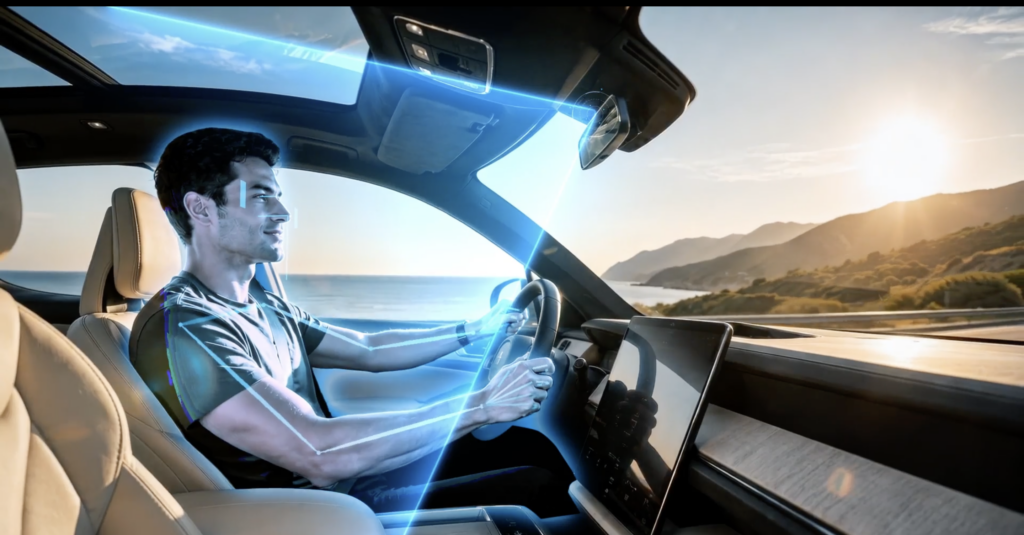

Driver Drowsiness and Attention Warning (DDAW)

Driver Attention Zones

Advanced Driver Distraction Warning (ADDW)

Dynamic HMI

Driver Availability Monitoring

Personalization

Intoxication Detection

Vital Signs

Cognitive Load Detection
OMS Use Cases

Occupant Classification (NCAP26)

Body Joint Analysis

Out of Position (NCAP26)

Hands-on-Wheel Detection

Seat Belt Detection (NCAP26)

Body Metrics Analysis (height, weight)

Occupant Detection

Gesture Recognition
Personalization

Object Left Behind

Emotion Recognition
Advanced Vision Processing for DMS and OMS
Reliable in-cabin perception begins with high-quality visual information.
Before AI algorithms can interpret driver and occupant behavior, raw camera data must be processed and optimized. Advanced image signal processing helps provide consistent image quality across changing cabin conditions, including low light, bright sunlight, nighttime driving, and infrared illumination.
Key Vision Capabilities

High-dynamic-range imaging

Low-latency image processing

Visible and infrared sensor compatibility

Multi-camera support

Low-light image optimization

Real-time video processing
Low-Latency Occupant Perception
Driver and occupant monitoring systems operate continuously. Image processing and perception must therefore happen with minimal delay.
Low-latency processing helps deliver current information about driver and passenger conditions to downstream safety, automation, and user experience systems.
Benefits of Low-Latency Processing

Faster perception updates

Continuous in-cabin monitoring

Improved system responsiveness

Real-time driver and occupant awareness

Efficient processing of multiple camera streams
Edge AI for Real-Time Occupant Understanding
Modern in-cabin perception systems combine specialized processing resources to transform visual data into actionable insights.
Image Signal Processing
Processes incoming camera data and prepares visual information for perception algorithms.
Neural Processing
Handles real-time signal-processing functions that complement AI and vision workloads.
Digital Signal Processing
Handles real-time signal-processing functions that complement AI and vision workloads.
Application Processing
Supports operating systems, perception frameworks, and higher-level software applications.
By processing more information at the edge, these architectures can reduce the workload placed on the vehicle’s central computing platform.
From Camera Input to In-Cabin Intelligence
A modern DMS and OMS perception pipeline can be represented as
Camera Sensors → Image Signal Processing → Computer Vision and Edge AI → Driver and Occupant Understanding → Safety, Automation, and User Experience Functions
This integrated approach transforms raw camera information into real-time insights that vehicle systems can use.
Recommended solutions
indie’s vision processor solutions integrate a world-class image signal processing (ISP) with on-chip artificial intelligence (AI) processing and proven perception software. Our co-optimized hardware and AI stack deliver advanced imaging and real-time insights for next-generation ADAS and edge vision systems.
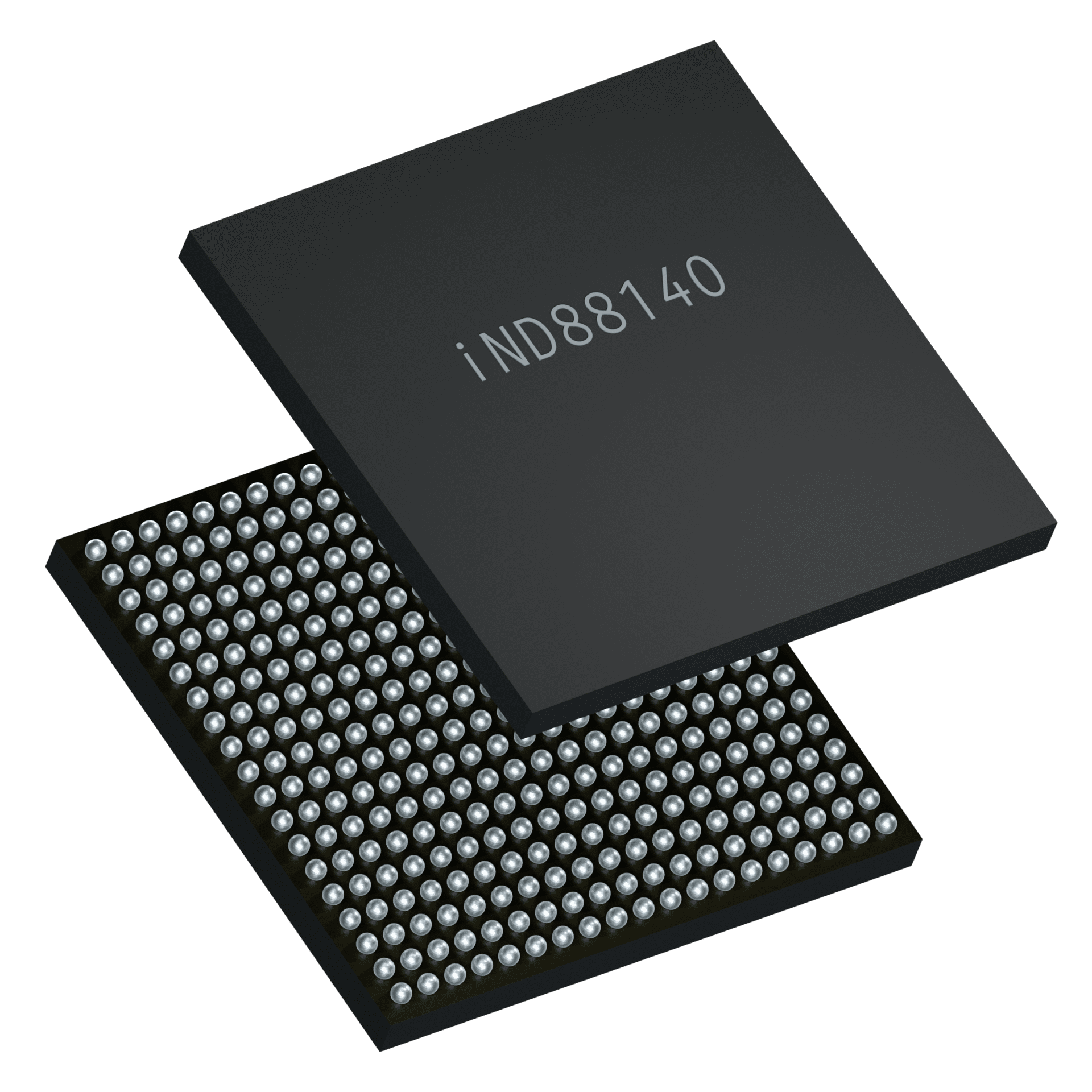
System-on-Chip (SoCs)
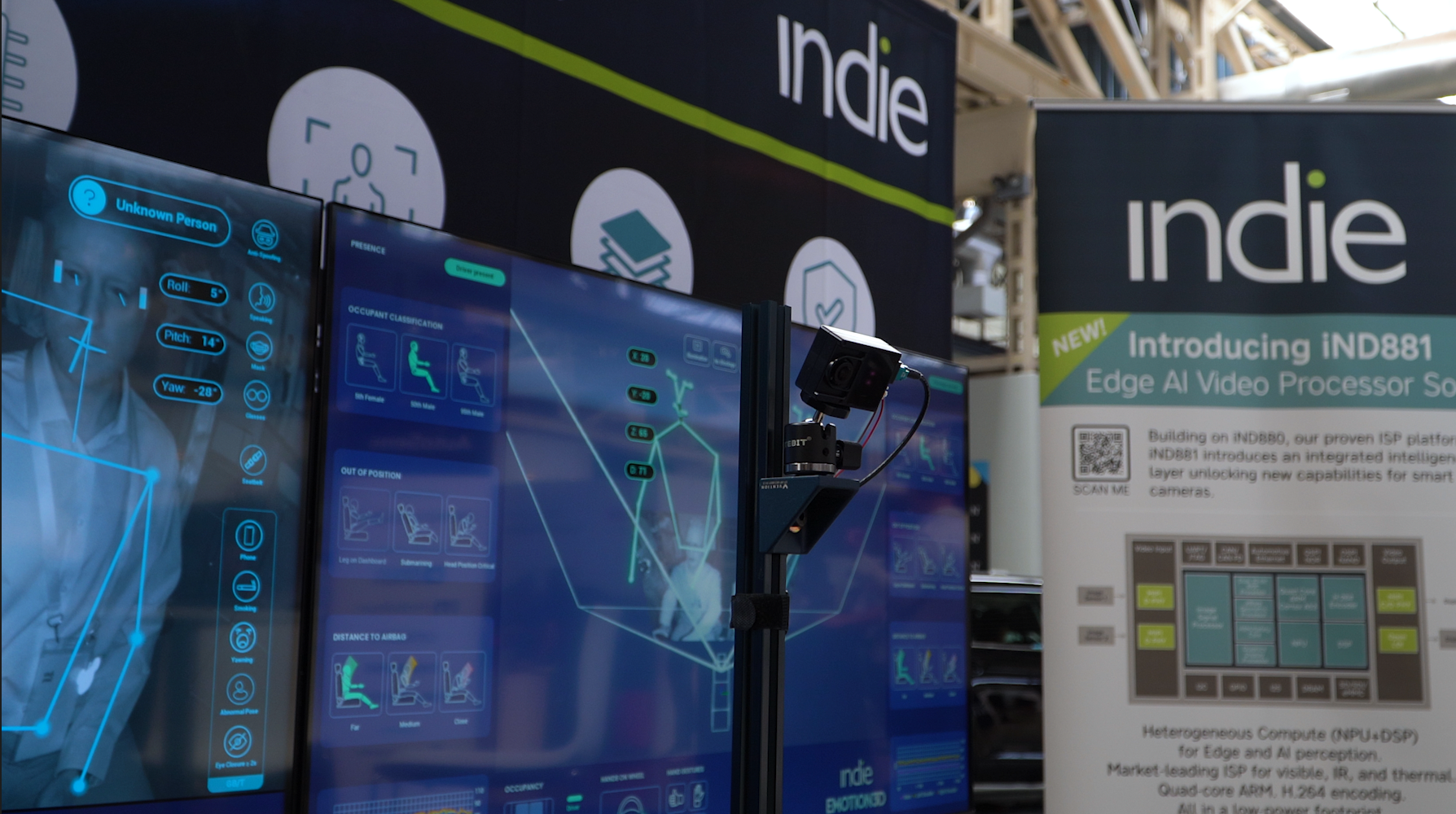
Perception Software

In-Cabin Solution of the Year
Resources
Demonstrating Real‑World Perception Solutions and More at AutoSens and InCabin USA
Learn how Edge AI, perception software, DMS/OMS platforms, and in-cabin sensing technologies are evolving to support next-generation occupant monitoring systems.