Simon Ayotte, Principal Scientist – Lasers and Photonics, indie’s Photonics BU The LXM is a compact semiconductor laser module exhibiting world-class linewidth and frequency noise performance, surpassing even high-end fiber lasers, as detailed in the white paper Rethinking Laser Performance: Advancing Narrow-Linewidth Laser Characterization with PSDFN – indie. Figure 1. Semiconductor laser chip, butterfly package and LXM module. For advanced applications such as distributed acoustic sensing (DAS), atomic reference locking,…

By Marcus Duelk, Mathieu Faucher & Marco Rossetti The rapid evolution of photonics is reshaping what’s possible in precision sensing, quantum technologies, and advanced imaging. At the core of many of these breakthroughs lies a fundamental component: the single-frequency laser. As industries demand higher spectral purity, improved stability, and greater integration, semiconductor laser technologies are being pushed further than ever before. indie has recently showcased two major advancements that illustrate…
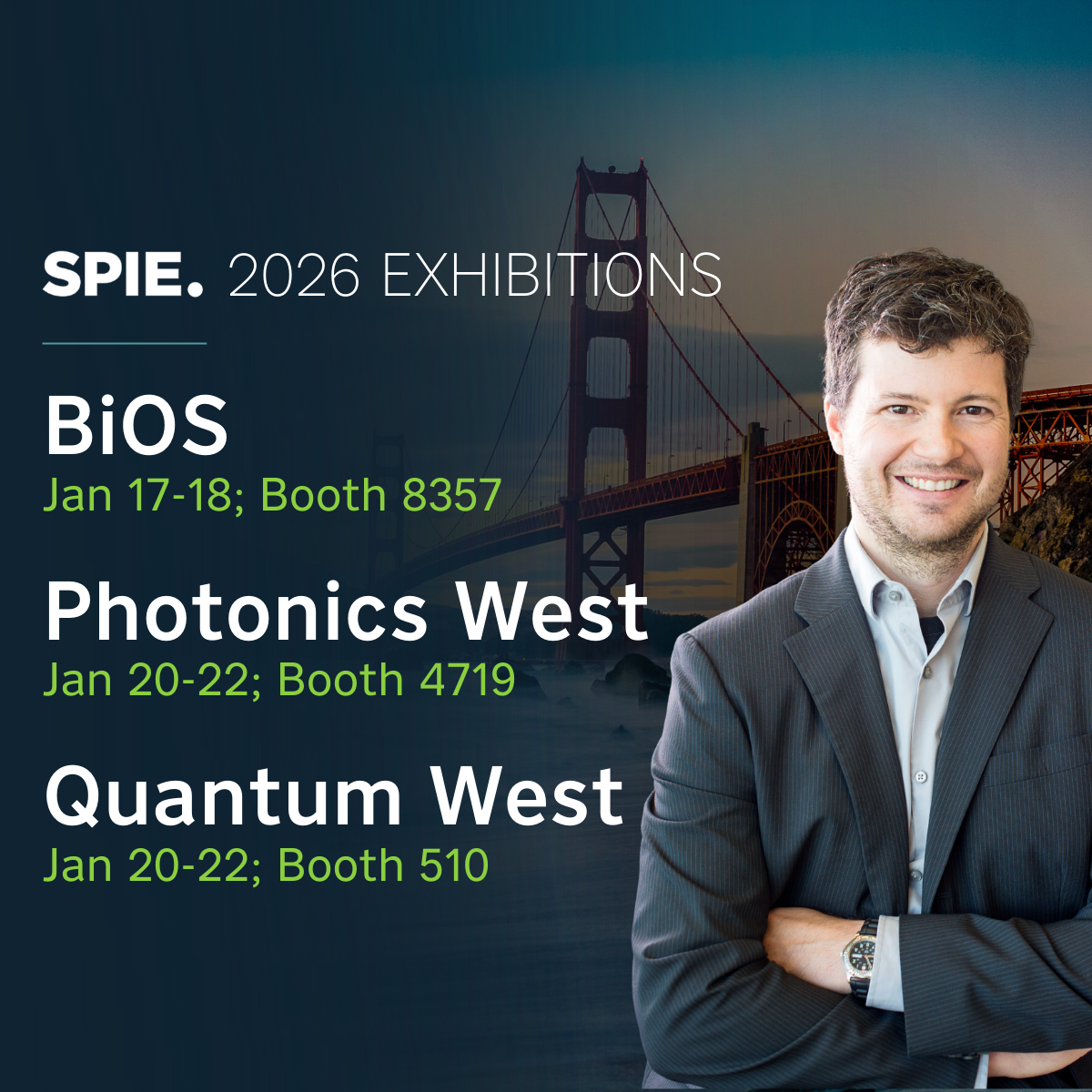
Photonics West is the world’s largest optics and photonics event, bringing together thousands of innovators in optics, lasers, and quantum technologies at the Moscone Center in San Francisco, CA. This global stage is where cutting-edge research meets real-world applications. indie will be exhibiting at all three SPIE exhibitions, including Bios (booth #8357), Photonics West (booth #4719), and Quantum West (booth #510), along with five technical presentations covering our optical, laser,…

By Pascal Deladurantaye – Director of Products and Strategic Marketing Quantum computing threatens traditional encryption, driving the need for quantum-secure solutions like Continuous-Variable Quantum Key Distribution (CV-QKD). This article explores the challenges and success factors for large-scale CV-QKD deployment and highlights how indie’s photonic solutions—anchored by the LXM laser—deliver unmatched stability, scalability, and integration for next-generation secure networks. Introduction As progress in quantum technologies accelerate, the looming threat of quantum…

By Samuel Gouin, Product Line Manager – FBG Components, indie’s Photonics BU The market for ultrafast lasers has seen tremendous changes in the last 10 to 15 years. Back then, only a couple of companies were able to offer the required specs for pulse duration, energy and quality required for industrial or medical (e.g. ophthalmology) applications. Nowadays, many suppliers are able to provide reliable lasers with competitive specifications, pricing and…

By Michel Bégin, Product Line Manager, Fiber Laser, indie’s Photonics BU In the evolving landscape of digital histopathology and biomedical research, the demand for real-time, non-destructive imaging has never been greater. Traditional staining-based workflows, while effective, are slow, labor-intensive, and introduce variability. Enter label-free nonlinear imaging—a technique that leverages intrinsic tissue contrast without dyes, enabling faster and more accurate diagnostics. Why Label-Free Imaging Matters Label-free imaging techniques such as Second…

In this blog summarizes indie Photonics’ optical components and subsystems that empower next-generation quantum technologies, specifically quantum computing and Quantum Key Distribution (QKD). indie’s portfolio includes ultra-low-phase-noise lasers, high-performance optical filters, and advanced photonic integration platforms that together enable scalable, high-fidelity quantum systems. Introduction — Quantum Technologies and their Reliance on Optics Quantum technologies are ushering in a new era of computation, communication, and sensing where information is encoded, transmitted,…
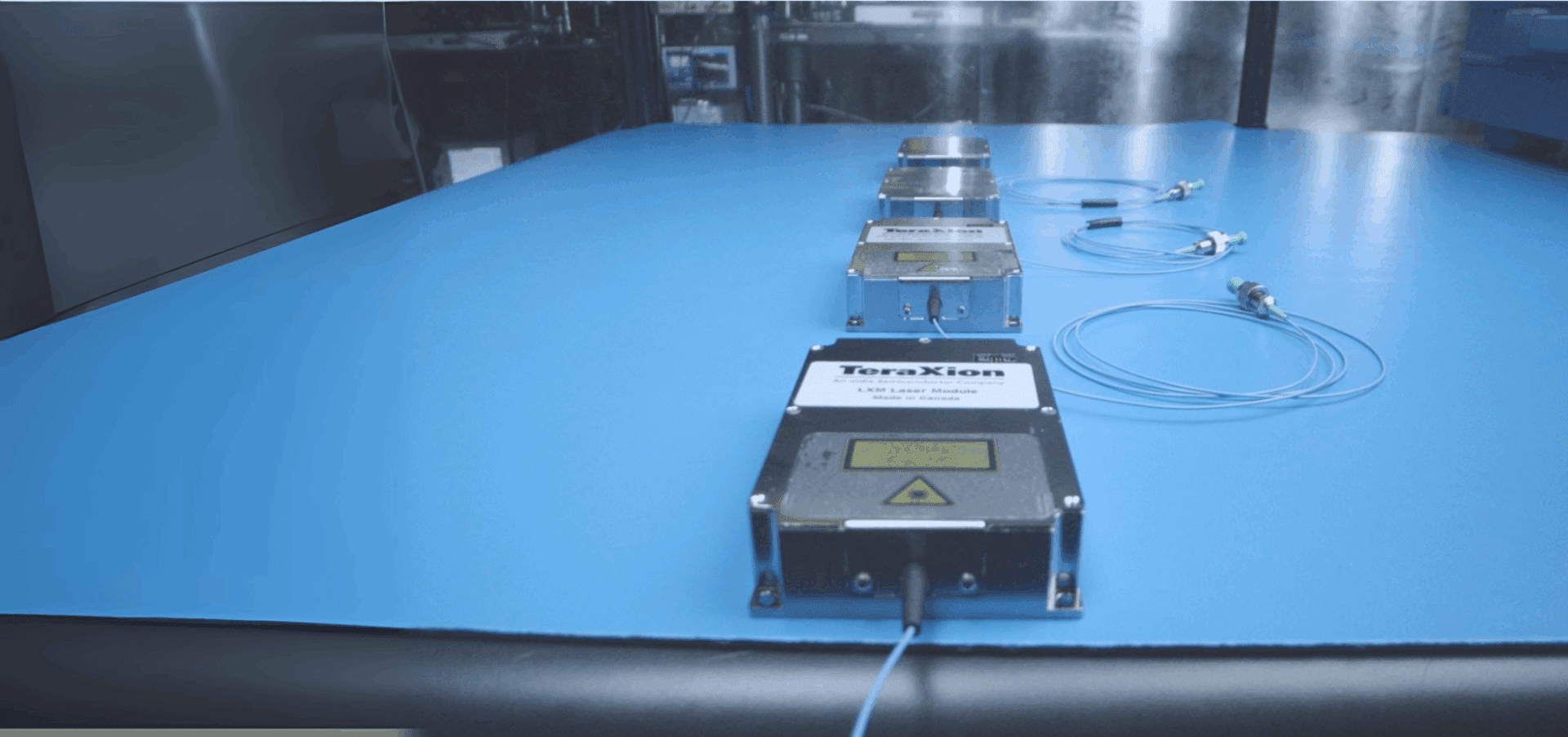
With the turnkey 100% solid-state LXM laser, indie introduces a key building block for seamless integration in sensing applications requiring low frequency noise and precise frequency tuning at a high sampling rate. The LXM sets a new standard for enhanced detection by delivering low noise, high optical power, and a narrow-linewidthhallmarks of superior laser sources and essential elements for successful applications. The LXM-S features a typical linewidth of 15 kHz,…
Quantum Key Distribution (QKD) is a cryptographic primitive that lets two distant parties, conventionally called Alice and Bob, generate a shared string of random bits that only they know. Unlike public key algorithms whose security rests on unproven mathematical assumptions, QKD relies on fundamental quantum mechanical laws: any attempt by an eavesdropper (Eve) to observe the quantum states inevitably introduces a measurable disturbance, so Alice and Bob can detect and discard compromised key…
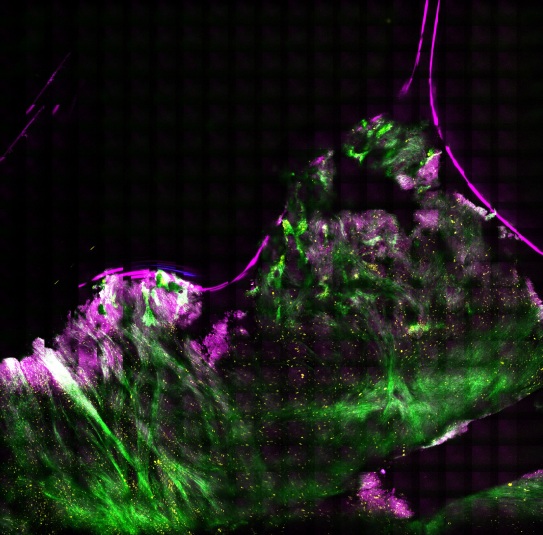
Customer Background Dr. Kayvan Forouhesh Tehrani is an experienced biophotonics engineer specializing in microscopy and bioimaging and is the founder and CEO of Eleuthra Photonics. Eleuthra Photonics specializes in developing and producing rapid image-based diagnostic tools for analyzing tissue and cell samples, with a primary focus on cancer and other disease diagnoses. Eleuthra’s Tetraquant™ platform provides multimodal nonlinear imaging technology through the use of a single femtosecond excitation laser. The…

A key challenge in transceiver and digital signal processing (DSP) testing is generating significant levels of chromatic dispersion. While transmission fiber is the most intuitive solution, is it the most efficient in terms of cost, space, and performance? A Cost-Effective, High-Performance Alternative indie’s Chromatic Dispersion Emulator (CDE) is a fixed, entirely passive solution that replicates the effects of thousands of kilometers of fiber transmission. Built on indie’s proven fiber Bragg…
Narrow-linewidth lasers are increasingly sought after for their remarkable low frequency noise and high temporal coherence, making them indispensable in advanced applications such as high-resolution spectroscopy, long-range fiber sensing, and coherent light detection and ranging (LiDAR). Their ability to deliver precise, stable outputs has propelled their adoption across industries requiring fine optical control. However, as these lasers become more prevalent, accurately characterizing their performance has grown more critical—and more complex.…