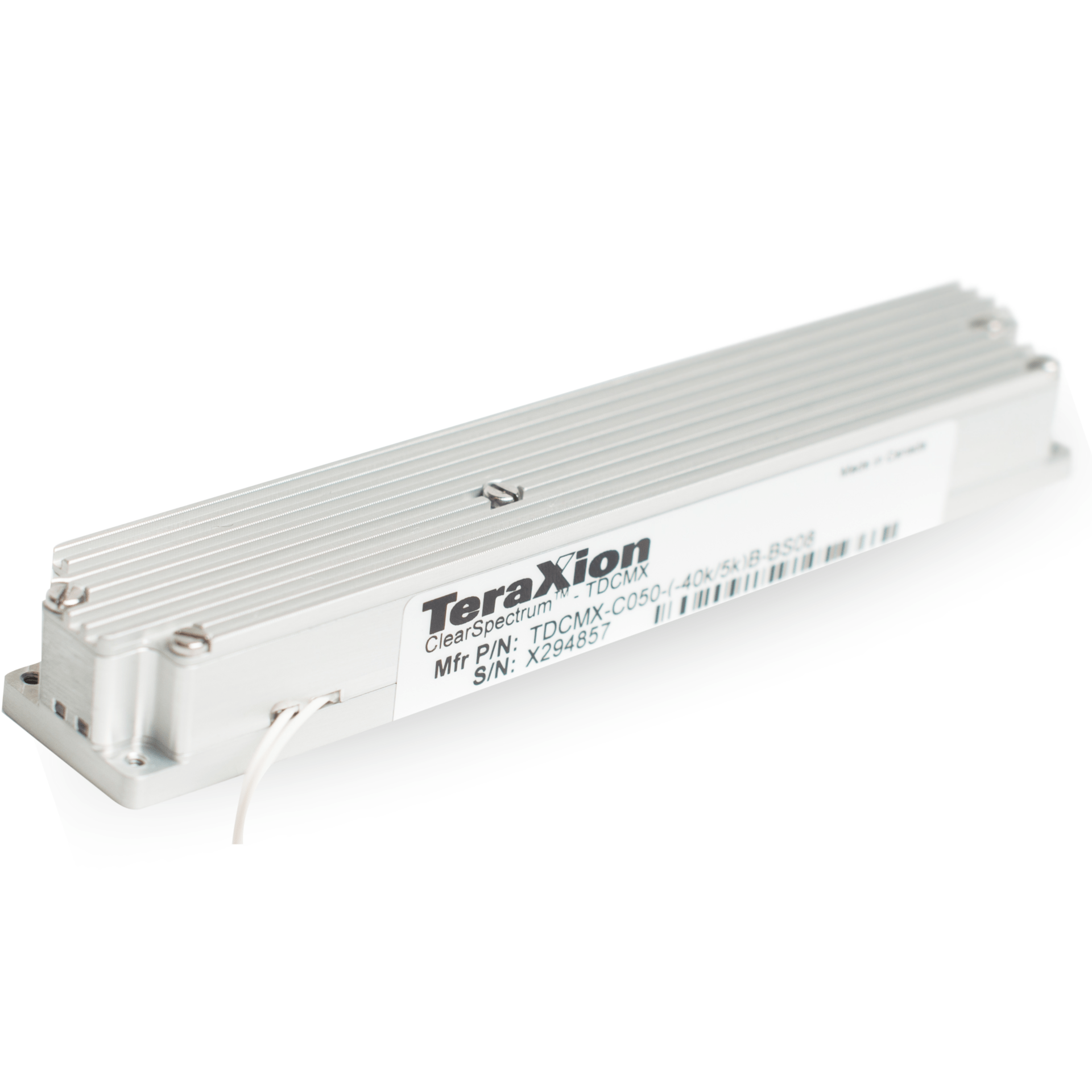



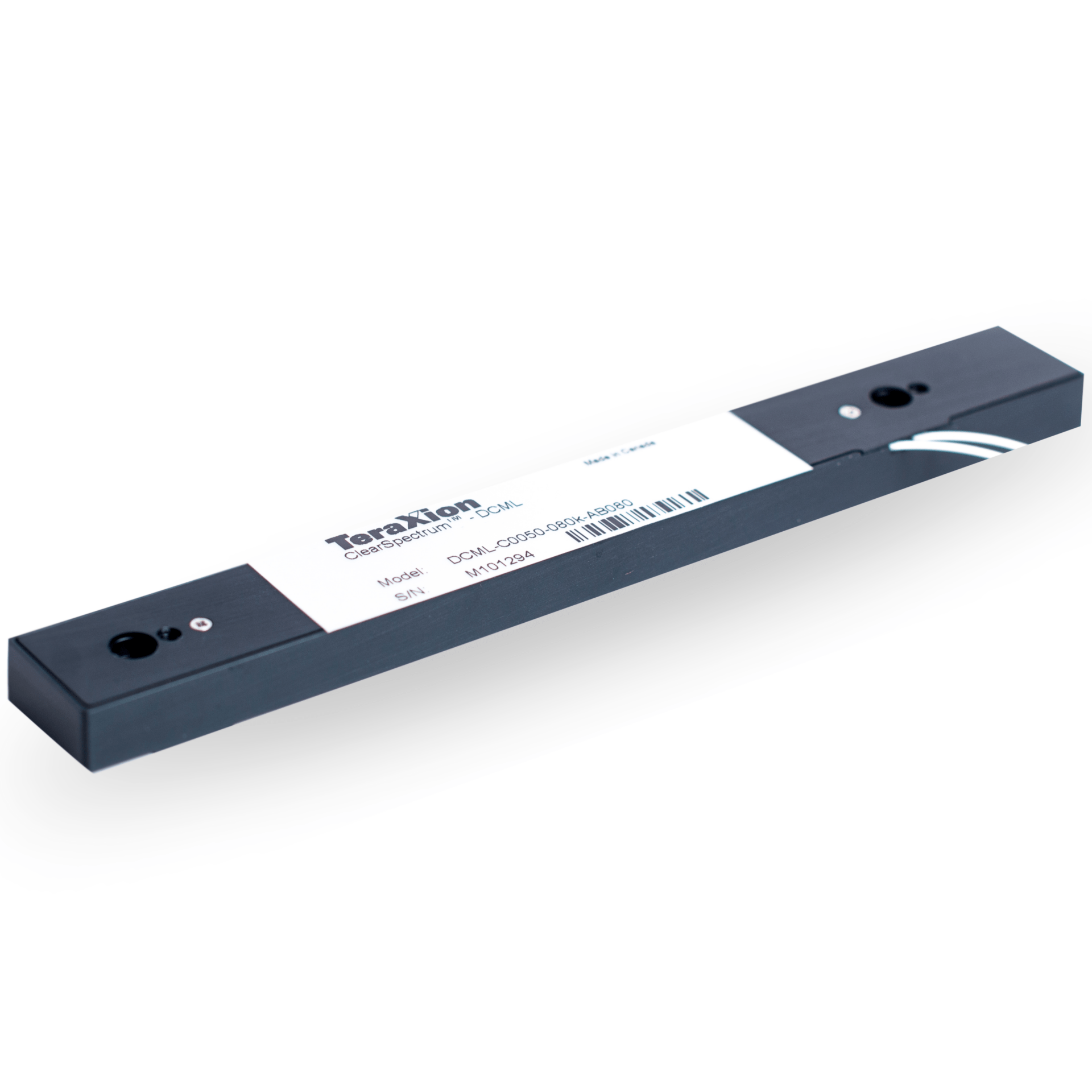
 Product Brief
 Sales & Technical Support
Features
- Ultra-Low Latency
- Efficient
- Compact
- Reliable
- Passive
- Rugged
Applications
- Discrete Variables Quantum Key Distribution (DV-QKD)
- Entreprise Networks
- Utilities Networks
- 5G X-haul Networks
- Fiber-to-the-Premises (FTTx)
- Low-Density Region DWDM Networks
Webinar

State-of-the-art Dispersion Management, Optical Filtering, and Low Noise Lasers for QKD Systems

Patrice Dionne
Product Line Manager
Communication and internet service providers (CSP & ISP) are extending their reach to connect as many as possible, in the most efficient way. Networks using intensity modulation direct detection (IMDD) require a simple, cost-effective, and reliable chromatic dispersion compensation solution. indie’s FBG-based DCML have been widely deployed as essential components of regional and metropolitan networks for more than 15 years. The DCML has dominated the FBG-based dispersion compensation market because the proven-reliable, compact modules are a totally passive solution that features ultra-low latency and low-insertion-loss.
- indie’s channelized FBG technology mitigates both interchannel and intrachannel nonlinear impairments.
- The compact DCML efficiently compensates chromatic dispersion with less than two meters of fiber—much less than the kilometers of fiber required for DCF modules, reducing link latency by 20%.
- The DCML is a completely passive device, making it ideal for networks with limited electrical power budget.
Key Features and Benefits
Ultra-Low Latency:
The DCML features a latency of less than 25 ns, a reduction of over 1000x compared to dispersion compensating fiber (DCF), making it the perfect choice for latency-critical networks.
Efficient:
DCML’s channelized FBGs minimize the generation of non-linear effects, such as self-phase modulation and four-wave mixing, enabling the use of higher transmission power levels.
Compact:
The DCML has dimensions of only 162 x 20 x 9 mm, including the optical circulator.
Reliable:
DCML units are in use within critical networks worldwide and continue to operate after more than 15 years.
Passive:
The DCML is a completely passive, FBG-based device that uses no electrical power.
Rugged:
The DCML’s athermal package is certified for operation in temperatures ranging from -5 °C to 70 °C (an extended-range version ranging from -40 °C to 85 °C is available for outside plant applications).
| Product Details | |
|---|---|
| Compensation Level | 20 km to 200 km |
| Channel Spacing | 50 GHz and 100 GHz |
| Latency | < 25 ns |
| Standard Operating Temperature | -5 °C to 70 °C |
| Extended Operating Temperature | -40°C to 85°C |
Related Products
| Product | Description | |
|---|---|---|
Offering adjustable, full C-band channel dispersion correction. |

|