





Femtosecond lasers offer numerous opportunities, influencing advancements in scientific, medical and industrial fields. Currently, a wide array of ultrafast laser products is available, emitting at various wavelengths in the near-infrared and visible ranges. In recent years, there has been a notable emergence of several alternatives to aging, complex, expensive, and often unreliable ultrafast lasers from established players. In this application note, we discuss how to choose a laser source that best meet the needs and requirements of multiphoton microscopy applications.
Multiphoton Microscopy
Multiphoton microscopy (MPM) is a powerful imaging technique widely used in biological and biomedical research. Unlike traditional fluorescence microscopy, which uses single-photon excitation, MPM employs multiple photons to excite a fluorescent molecule. This approach offers several advantages, including deeper tissue penetration, reduced photodamage, and improved spatial resolution. Although three-photon microscopy offers many advantages, two-photon microscopy is currently more popular as suitable laser sources are more readily available in the desired wavelength range. For two- or three-photon microscopy, high photon densities are crucial to achieve sufficient fluorophore excitation.
Photon densities need to be orders of magnitude higher than that required for confocal or single-photon microscopy. To achieve such high photon densities, laser sources providing very high peak power in the ultrafast regime are required.
Laser Sources for MPM
One of the biggest challenges to the widespread adoption of multiphoton microscopy is finding a suitable light source for efficient fluorophore excitation. To reach the high peak power needed for nonlinear optical processes, femtosecond mode-locked lasers are employed. These ultrafast lasers can provide very high peak powers during very short pulse durations while maintaining a low average power to avoid damaging the specimen. Until recently, the best lasers for two-photon microscopy were tunable titanium sapphire (Ti:Sa) lasers. Although modern Ti:Sa lasers provide excellent beam quality and stability, they are extremely expensive for many laboratories. They occupy significant table and floor space, and require regular maintenance of their liquid cooling systems, which produce noticeable noise.
In recent years, this has motivated laser manufacturers to introduce air-cooled fiber and solid-state lasers for two-photon microscopy, which are less expensive and much more compact. Unlike Ti:Sa lasers, these new devices emit pulses at a single fixed wavelength and have recently become available in the highly desirable 900 nm and 1000nm range with pulse durations lower than 150 fs.
In the next section, we will review important parameters to consider when selecting an ultrafast laser for multiphoton microscopy.
Choosing a fs Laser for MPM
The selection of the appropriate laser involves considering the interaction of average power, peak power, pulse duration, laser repetition rate, and pulse quality. These parameters can be confusing, so we will review the most important ones and how they interrelate.
Average and Peak Power
It is common knowledge that fluorescence intensity generated from a sample via two-photon process is proportional to the square of the laser power. While this is correct, the actual fluorescence intensity is proportional to the square of the laser “peak” power (Ppk), laser repetition rate (R), and laser pulse duration (τ):
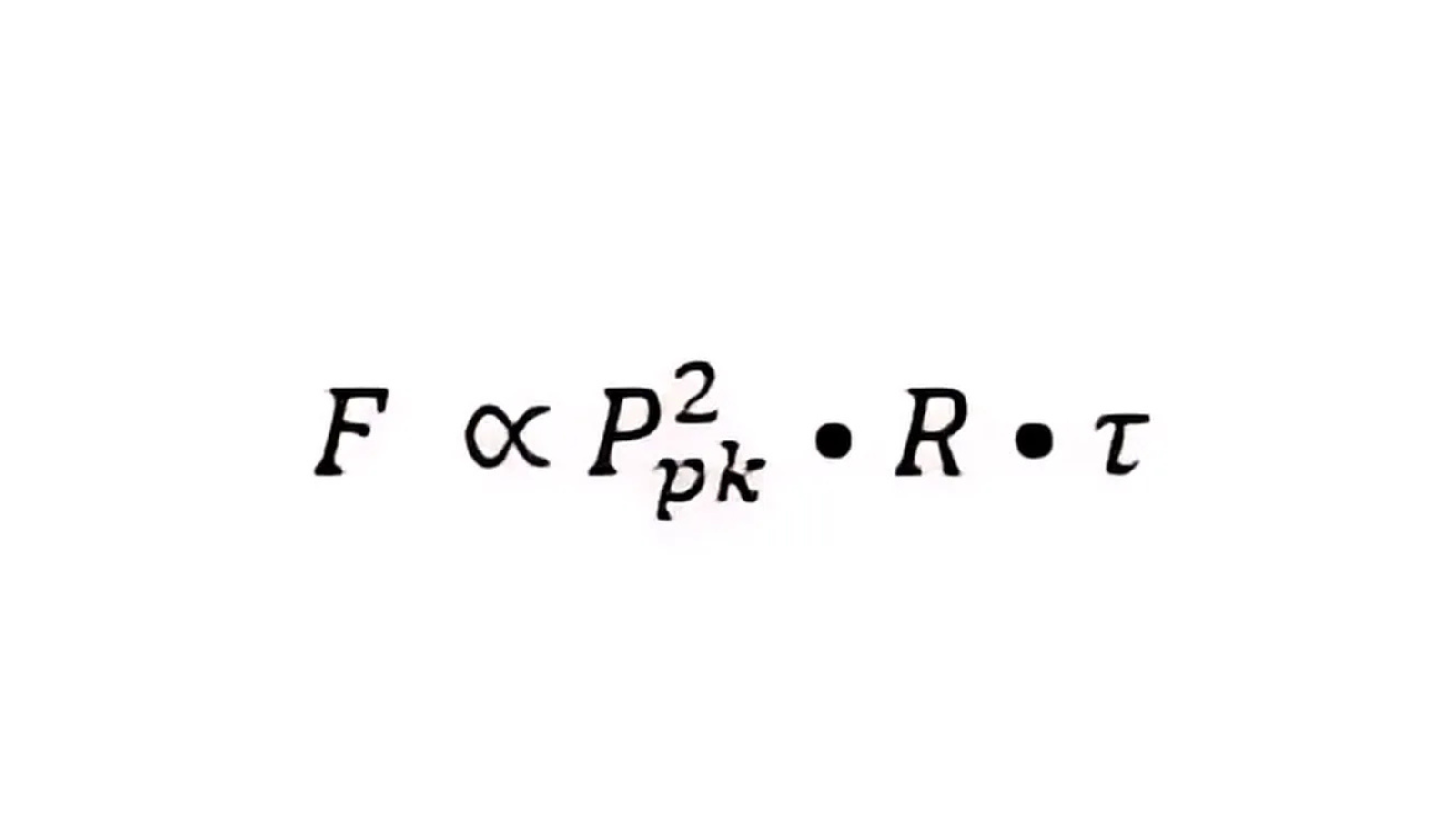
Fig. 1 below compares the fluorescence generated with two lasers with same pulse duration and average power. One laser has a repetition rate of 40MHz while the other one has a repetition rate of 80MHz. indie’s VINCI-1064 new fs laser, having a repetition rate that is half as low, will therefore have a peak power that is double that of an 80 MHz laser. This higher peak power will lead to a two-fold improvement in fluorescence intensity according to equation 1 above.
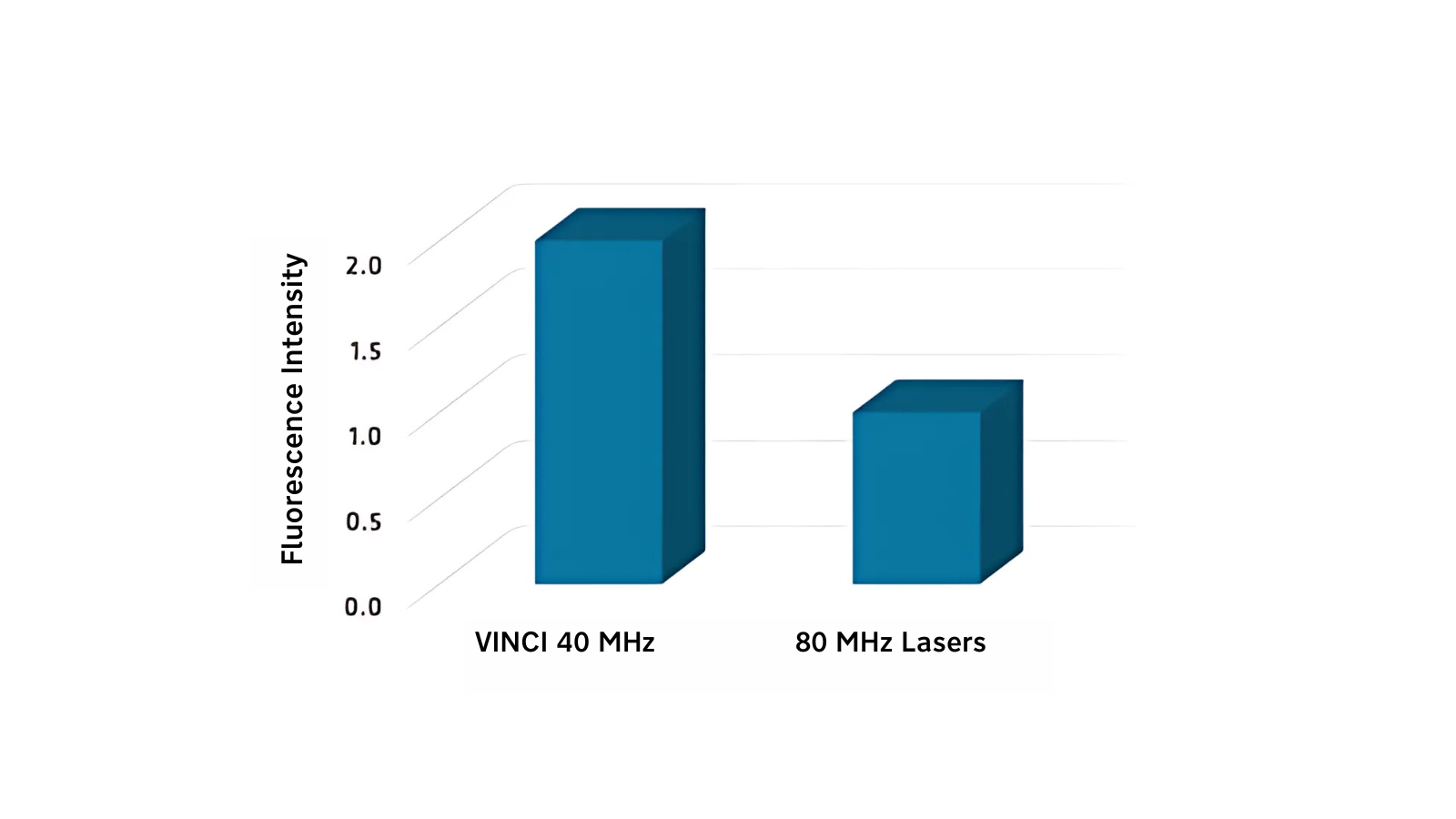
High peak power is required in the multiphoton excitation process, in which two or more photons are absorbed simultaneously by a fluorophore, resulting in the emission of light at a shorter wavelength than the excitation light. While high peak power is necessary, it is crucial to keep average power at an acceptable level to avoid photodamage to the sample. Proper balancing of peak power, average power, and repetition rate is therefore essential.
Pulse Duration
Femtosecond lasers typically have pulse durations in the range of 80-200 femtoseconds. As discussed above, at the same average power, shorter pulses lead to higher peak power, increasing fluorescence efficiency. VINCI-1064 features pulse duration of less than 60 femtoseconds (typically 50 fs) with peak power approaching 1 MW, ideal for efficient fluorophore excitation.
But although shorter pulse durations are advantageous to improve fluorescence intensity, it becomes critical to adequately compensate chromatic dispersion of the microscope optics to prevent pulse broadening at the sample. That is why VINCI-1064 features a high-accuracy tunable dispersion pre-compensation up to 25 000 fs2.
Emission Spectrum
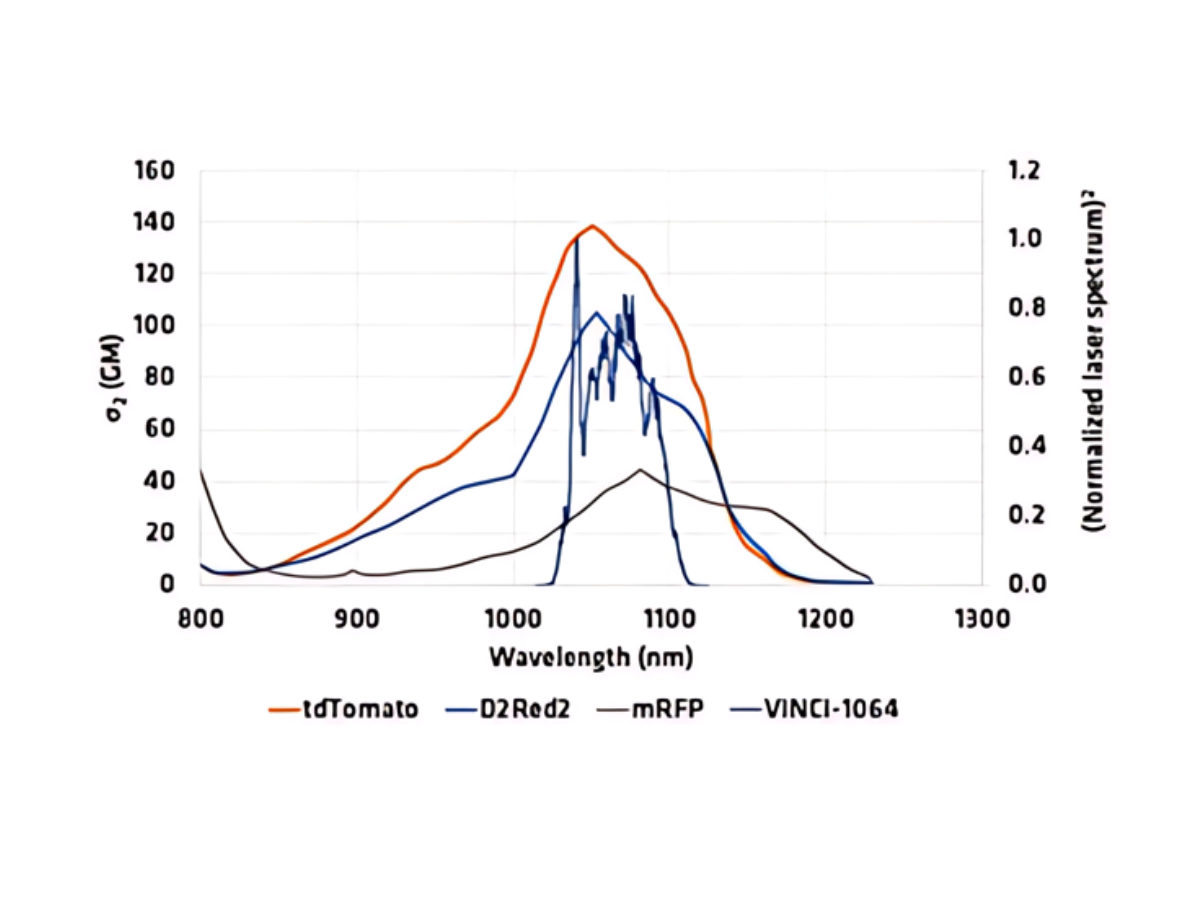
Two-photon microscopy at a wavelength of 1064nm allows to excite red fluorescent proteins. Figure 2 below shows the two-photon absorption cross-section of a few of these fluorophores superimposed with VINCI-1064 emission spectrum. As can be seen, VINCI-1064 emission spectrum is well-matched to the two-photon absorption spectrum of most popular red fluorescent proteins.
Cost
Despite a lower cost, single-wavelength lasers that were launched in the last few years are still expensive compared to tunable lasers. This high cost is inherent to the complex laser architecture commonly used in such compact ultrafast fiber lasers. VINCI series of femtosecond fiber lasers are based on an ultra-simple optical architecture and represent a very cost-effective solution for two-photon microscopy. VINCI’s cost often compares favorably to the typical cost of repairing a laser from an established player.
A summary of laser performances per laser type is reviewed in Table 1 below.
| Performance Criteria | VINCI-1064 | Other Fiber Lasers | Ti:Sa |
|---|---|---|---|
| Average Power | Good | Good | Medium to Good |
| Fluorenscence Intensity | Very High | Medium to High | Medium |
| Pulse Duration | < 60 fs | < 100 fs | < 150 fs |
| Cost | $ | $$ | $$$ |
Experimental Results
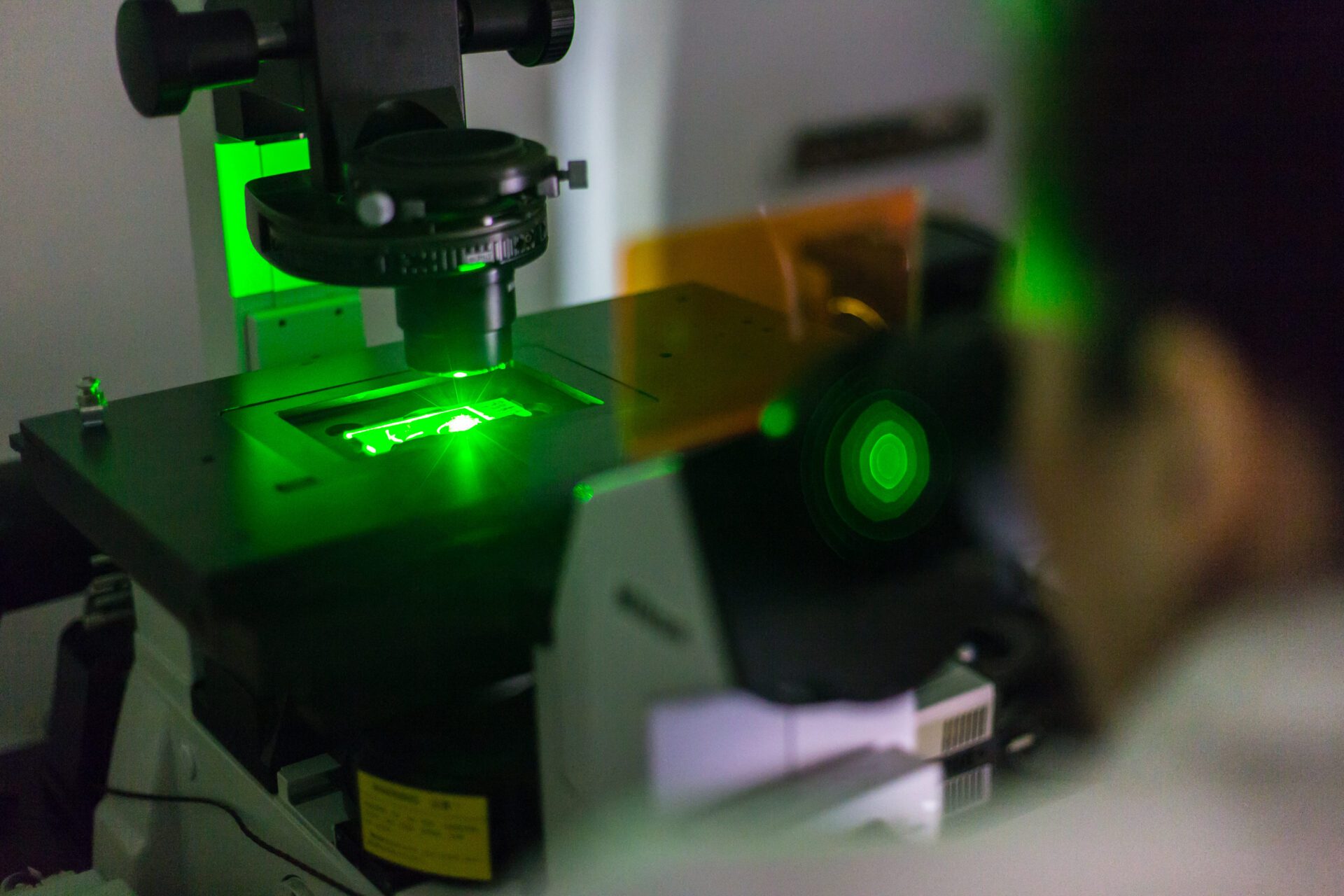
VINCI-1064 was installed on a 2-photon microscope as illustrated in Figure 3. Figure 4 illustrates cultured rat hippocampal neurons expressing the fluorescent protein mCherry and the chloride ion indicator MQAE (blue) imaged with the indie laser at 1064nm on the 2-photon microscope.
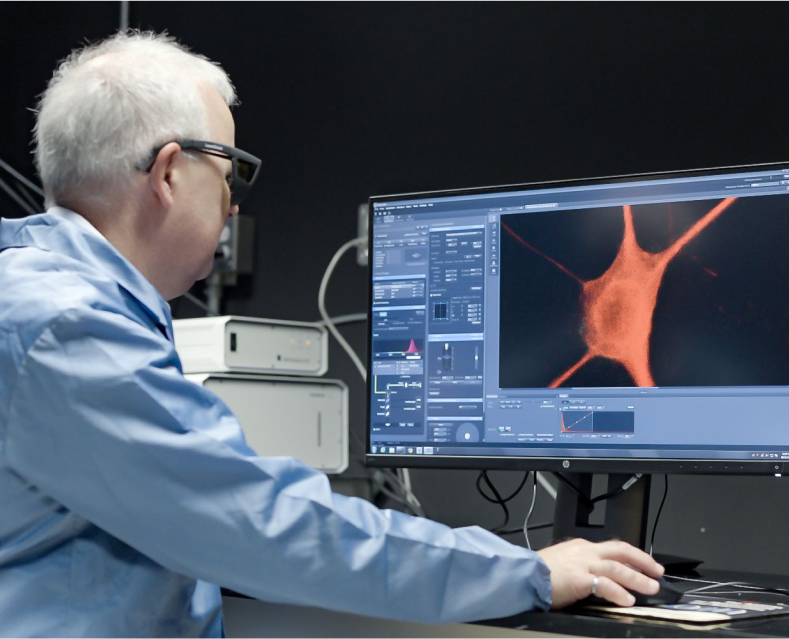
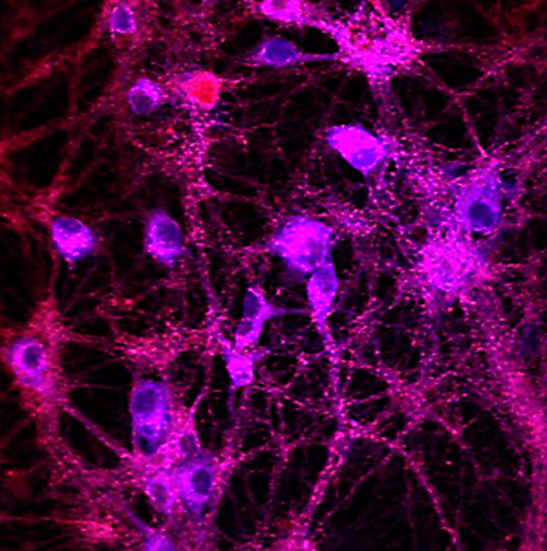
As shown in Figure 4, VINCI-1064 allows high quality imaging of hippocampal neurons with high signal-to-noise ratio.
Conclusion
Multiphoton microscopy (MPM) is a powerful imaging technique widely used in biological and biomedical research. To reach the high peak power needed, femtosecond mode-locked lasers are required. To properly choose the optimal femtosecond laser, it is important to consider factors such as average power, peak power, pulse duration, laser repetition rate, and pulse quality. indie’s new VINCI series of femtosecond fiber lasers feature very high peak powers and are based on an ultra-simple optical architecture that makes them the most cost-effective solution for two-photon microscopy.
Related Products
| Products | Advantages | |
|---|---|---|
| Femtosecond Laser – VINCI-1064 | – Very cost-effective – Simple Oscillator Design – Very High Peak Power – Compact and Robust – SESAM-free Design – Tunable dispersion pre-compensation | View product |
*Courtesy of CERVO Research Center, Quebec City, Canada
Blog Article