Distracted driving at 55 mph for five seconds is the same as driving with your eyes closed the length of a football field. Let that sink in. In honor of April being Distracted Driver Awareness Month, let’s address the importance of safer driving. Motor vehicle crashes are a leading cause of death in many countries. In the United States alone, crashes kill over 100 people a day. Unwanted accidents often…

Michael McDonald, Director of Marketing In-cabin monitoring is essential for enhancing safety, security, and the overall experience for vehicle occupants. When it comes to safety, vision-based monitoring plays a crucial role in helping to reduce potential accidents, improving emergency response, and complying with regulations in the evolving landscape of automotive technology. Specifically, vision-based systems improve vehicle safety through the detection of distracted driving and driver fatigue. Distracted and drowsy driving…
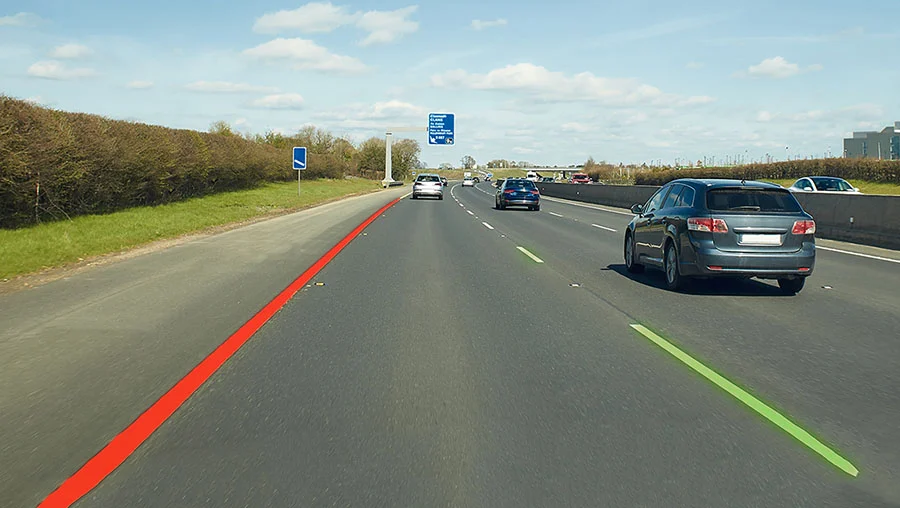
By Michael McDonald, Director of Marketing Image processing and vision-based sensors are fast becoming critical components for driver safety features. Reading traffic signals, street signs and lane divide colors accurately is essential to a vehicle’s ability to process information for safety features like automated braking or vehicle lane assist. But, before we can dive into emerging image processing technology, let’s look at how color filter arrays first began. Back to…

By Chet Babla, SVP Strategic Marketing With driver assistance and driving automation requiring multiple sensors and real-time processing, ADAS electrical and electronic system architectures will be challenged by scalability. The societal benefits of greater driver, passenger and road user safety are well understood and documented, and indeed governments are increasingly regulating the need for advanced driver assistance systems (ADAS) in new vehicles (see example). In addition to the obvious human…

By Vincent Wang, VP of Sales and Marketing, Asia Light emitting diodes (LEDs) are a versatile, physically compact light source with a long operational life. They are also extremely efficient, far more so than incandescent bulbs, with high-brightness LEDs (HB-LEDs) now available that exceed 200 lumens per watt (lm/W). This lends itself to be an ideal choice for illuminating interior and exterior automotive applications. HB-LEDs, deployed in an array configuration…

Charging. Charging. Charging. Consumers today have an insatiable demand for power away from the home or workplace to keep their personal devices charged and connected to entertainment, work applications, and social networking. This is particularly true with younger generations whose waking hours are seemingly absorbed by apps, social media, gaming, and content streaming! In fact, the global average for individual mobile device use increased by 30% over a two-year span1…

by Donald McClymont, indie Semiconductor CEO and Co-Founder Whether it’s addressing the global challenges of climate change, supply chain security or ensuring the well-being of employees, partners and local communities, companies have an obligation to go beyond simply meeting the needs of their customers. And I believe it has never been more important to actively demonstrate how those responsibilities are being fulfilled in the areas of environmental sustainability, social commitments,…

Convenient and Efficient On-the-Go Wireless Power Delivery with Qi2 by Paul Hollingworth, EVP of Sales and Marketing While not yet ubiquitous, wireless charging has become widely available for smartphone users, with many of today’s phones supporting cord-free power transfer. This allows consumers to power their phones from standalone charge units and charging pads integrated into work surfaces, furniture and, more recently, vehicles. Charging a phone on-the-move is a high priority…

Advanced low-cost solution offers high performance, power, and ultra-compact size for mass deployment by Michael Wittmann, Senior VP of Marketing In our previous blog, we discussed multiple sensor modalities, including light detection and ranging (LiDAR), and their relative merits for automotive applications. LiDAR is an increasingly important enabling technology for modern vehicles as automakers seek to improve safety and driving automation features. Automotive LiDAR was initially targeted at fully autonomous…

The transformative power of lighting and power-delivery solutions By Michael Wittmann, Senior VP of Marketing From the incredible leaps forward in driver assistance and vehicle safety to the ever-increasing adoption of all-electric vehicles, there are a growing number of areas where advanced semiconductors are underpinning the rapid evolution of automotive technology (Autotech). However, today’s vehicles aren’t just about getting from A to B safely or in the most environmentally sustainable…
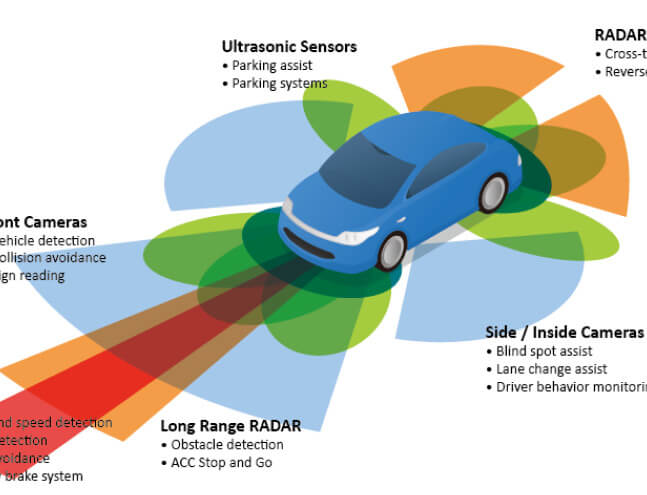
by Chet Babla, SVP of Strategic Marketing Understanding the Sensor Modalities Enabling the Uncrashable car In our last blog, “In Pursuit of the Uncrashable Car,” we identified the need for various sensor modalities to gather data. This data is critical to processing and enabling timely decision-making and ultimately triggers automated safety response actions such as braking, steering, or driver alerts. As advanced driver assistance systems (ADAS) and driving automation technologies…

by Donald McClymont, CEO A Social Imperative The World Health Organization (WHO) has widely reported that over 1.3 million people die tragically each year due to road traffic accidents globally, and many millions more are injured. Sadly, a large majority of these deaths are avoidable. Multiple national and regional initiatives have been launched in recent decades to address and reduce road-related tragedies. Of these initiatives, one of the most notable…